
How to Build a Routine That Fits Your Real Week
Start with four adaptable routine archetypes, keep the pieces that fit, and revise them using evidence from your own week.
Choose suggested habits, adapt them to your schedule, and review what remains sustainable.
A useful routine is a draft you can test—not a formula you have to obey.
Use templates as educational starting points, then shape a small sequence around your responsibilities and available time.
Why templates work best as starting points
A routine can reduce the number of decisions required to begin. But a schedule copied from another person may ignore your responsibilities, energy, health, access needs, and available time.
The useful question is not “Which successful person should I imitate?” It is “Which small sequence would make the behavior I value easier to repeat?” Prospersuit’s routine tools are designed to help you select and adapt individual habits rather than promise someone else’s outcome.
Important context
Routine templates are educational inspiration. They are not medical, mental-health, fitness, financial, or professional advice, and no routine guarantees a particular result.
Four routine archetypes to adapt
The Focused Morning
Begin with a deliberate plan before messages and requests take over.
- • Review today’s priorities
- • Choose one meaningful outcome
- • Start a short focus session
The Creative Deep-Work Routine
Reduce setup friction and protect a bounded period for demanding work.
- • Prepare the workspace
- • Silence optional notifications
- • Capture the next step before stopping
The Consistent Learning Routine
Turn passive reading or listening into a small practice you can revisit.
- • Choose one learning source
- • Take a short note
- • Apply or explain one idea
The Weekly Reflection Routine
Use evidence from the week to make the next plan more realistic.
- • Review completions and interruptions
- • Notice one useful pattern
- • Adjust next week’s commitments
How to turn a template into your routine
1. Name the problem
Be specific about what feels difficult: starting, remembering, switching contexts, stopping, or reviewing.
2. Choose the smallest useful sequence
Start with two or three actions. A shorter routine is easier to understand, test, and revise.
3. Set a realistic cue
Attach the first action to a dependable moment or event instead of an aspirational schedule you rarely control.
4. Practice before expanding
Keep the routine stable long enough to notice friction. Add complexity only when the existing sequence feels workable.
5. Review without judgment
Missed repetitions are information. Adjust the cue, duration, environment, or number of steps rather than treating a miss as failure.
Using routine templates in Prospersuit
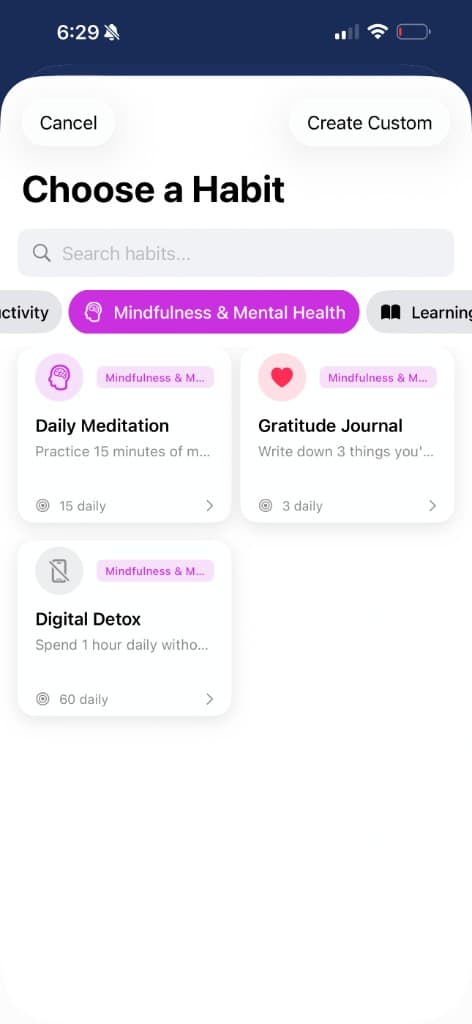
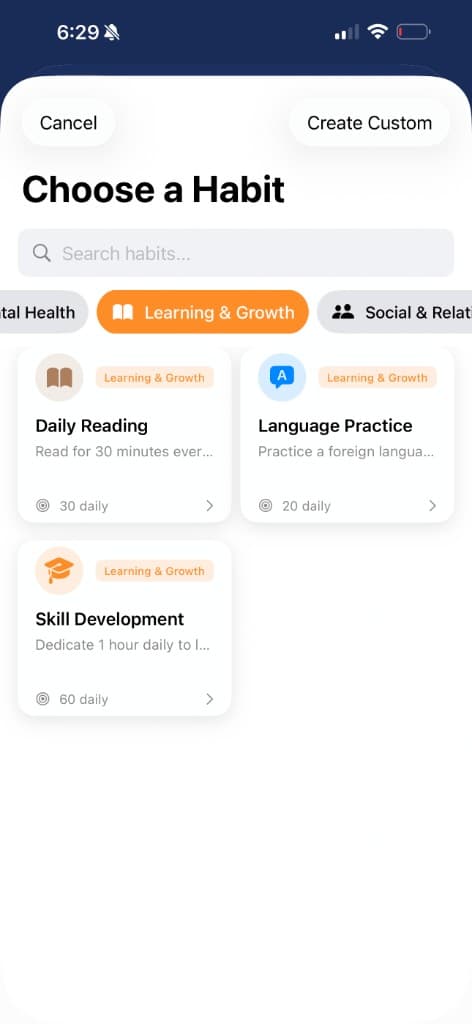
Browse a relevant category, review the suggested habits, and select only the items that fit. After adding them, use reminders or focus sessions where helpful, capture observations in Notes, and review completion patterns before changing the plan.
Website examples describe the workflow and do not imply that website interactions synchronize with the app. Feature availability and plan limits should be confirmed in the current app build.
From notes to practice
Build a routine that fits your week
Explore the current Prospersuit access options and adapt a small routine around the responsibilities you already have.